Zudo Tropical Fruits N.V.
ADAPTIVE CROPPING FOR RESILIENCE
Executive Summary

ZUDO TROPICAL FRUITS NV, a family-managed soursop producer in Suriname, faced significant sales declines in 2024 and 2025 due to disease and severe climate events (drought, heavy rains). To mitigate these losses and generate immediate income, ZUDO strategically diversified into short-term crops like watermelon and tamarind. This case highlights the critical importance of agricultural diversification and fast-cropping strategies as a rapid response to climate shocks and a means of income stabilization for agricultural SMEs.
Company Snapshot
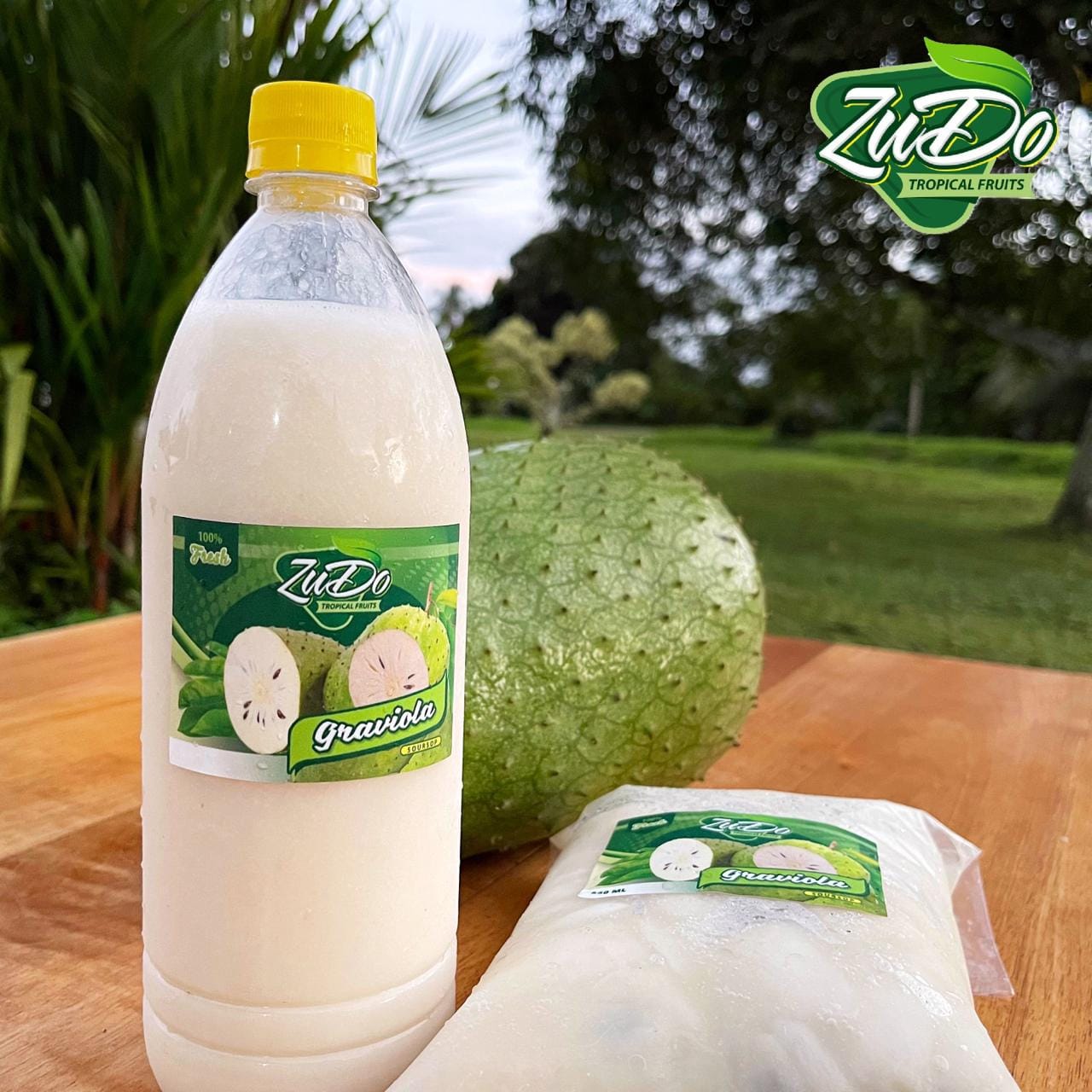
ZUDO TROPICAL FRUITS NV produces fresh soursop, pulp, and juice for B2C and B2B markets. The company, led by Chairperson Henk Donk, Managing Director Jill Donk, and Field Manager Mardi Sojo, is professionalizing its operations. They sought support from SURGE for agricultural equipment, ISO22000 certification, and specialized logistics.
Key Challenges & Climate Impact
ZUDO experienced a 30% sales drop in 2024. This was driven by:
Q1 2024: Soursop tree disease.
Q3 2024: Severe drought (climate change impact).
Q1 2025: Heavy rains potentially damaging soursop flowers.
The company also faced financial hurdles, with its own investment costs nearly doubling due to exchange rate changes.
Adaptive Strategy: Fast Cropping for Income Generation

Crucially, to mitigate income loss from the soursop challenges, ZUDO initiated planting of short-cycle crops:
Watermelon
Tamarind
This strategic pivot allowed ZUDO to generate income more quickly than from the slower-maturing soursop trees, providing a vital revenue stream during periods of extended primary crop failure.
Lessons Learned for Future Interventions
Income Diversification through Fast Cropping: Supporting farmers in adopting short-term, high-yield crops is a vital strategy for immediate income generation during primary crop failures caused by climate shocks or other unforeseen events. This builds financial resilience.
Climate Change Adaptation: Development programs must proactively integrate strategies for coping with extreme weather, including promoting diverse crop portfolios and resilient farming practices.
Agile Management: ZUDO's quick decision to plant alternative crops demonstrates the importance of agile management and the ability to adapt production plans in response to crises.
Financial Resilience: The impact of exchange rates underscores the need for financial advisory services for SMEs, including risk mitigation strategies for investments.
Conclusion
ZUDO TROPICAL FRUITS NV's experience provides a compelling example of how adaptive cropping strategies, particularly the use of fast-growing crops, can be instrumental for income stabilization when primary agricultural production faces severe climate-induced setbacks. This highlights the value of promoting diversified and resilient farming systems in vulnerable regions.
